Watercolor Boho Seamless Patterns: A Versatile Design Resource for Creative Projects
Watercolor boho seamless patterns have become a popular choice for designers, artists, and crafters looking for versatile and aesthetically pleasing design elements. These patterns blend the soft, organic feel of watercolor with the free-spirited essence of bohemian style, creating a unique visual language that resonates across multiple creative applications. Whether you're working on scrapbooking, web design, or fabric prints, these seamless patterns offer a flexible and repeatable design solution that can be easily adapted to various projects.
What Makes Watercolor Boho Seamless Patterns Unique?
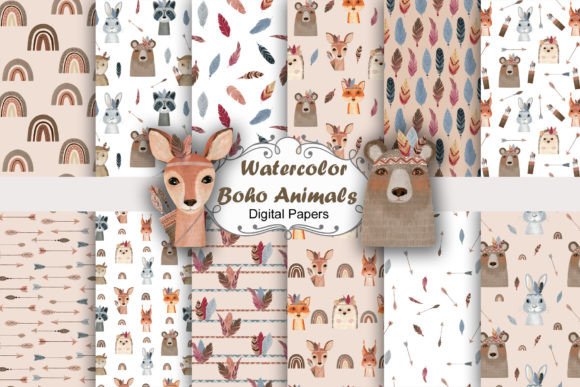
Watercolor boho seamless patterns are designed to be infinitely repeatable, meaning they can be tiled seamlessly without visible seams. This feature makes them ideal for use in backgrounds, textiles, and digital media where continuous coverage is essential. The combination of watercolor textures and bohemian motifs—such as floral elements, abstract shapes, and woodland animals—creates a rich visual palette that feels both modern and nostalgic.
Unlike traditional patterns that may require complex alignment or tiling techniques, seamless patterns are crafted to fit together effortlessly. This means users can scale them to any size while maintaining their integrity. The watercolor technique adds a handcrafted, organic quality that sets these designs apart from more rigid, geometric patterns often found in commercial design kits.
Design Elements That Define the Style
The key components of watercolor boho seamless patterns include:
- Soft, blended colors that mimic the natural gradients of watercolor painting.
- Freeform shapes that evoke a sense of movement and spontaneity.
- Woodland animal motifs that add a whimsical and earthy touch.
- Seamless tiling that allows for easy customization and scalability.
- Bohemian-inspired textures that reflect a laid-back, nature-loving aesthetic.
These elements come together to create a design that feels both intentional and organic, making it a favorite among those who value creativity and personal expression in their work.
How Do Watercolor Boho Seamless Patterns Compare to Other Design Resources?
When considering design resources, it's important to evaluate how watercolor boho seamless patterns stack up against other options such as vector graphics, stock images, and pre-designed templates. While each format has its own strengths, seamless patterns offer a level of flexibility and adaptability that is particularly useful for projects requiring repeated imagery.
For instance, vector graphics are excellent for scalability and editability, but they often lack the artistic texture and warmth of watercolor effects. Stock images, on the other hand, can be limited by copyright restrictions and may not align with the specific aesthetic of a project. Pre-designed templates can be time-saving, but they often lack the customization potential of seamless patterns.
Watercolor boho seamless patterns sit somewhere between these options. They provide the visual richness of hand-painted textures while offering the practical benefits of seamless repetition. This makes them especially well-suited for applications like journaling, apparel, and home decor, where a cohesive and visually appealing background is essential.
Best Use Cases for Watercolor Boho Seamless Patterns
Whether you're a designer, artist, or DIY enthusiast, there are numerous scenarios where watercolor boho seamless patterns can be incredibly useful:
- Scrapbooking: Add a soft, artistic touch to pages with seamless pattern backgrounds.
- Web design: Use them as website backgrounds or decorative elements in layouts.
- Journaling: Create a calming and inspiring environment for writing and reflection.
- Fabric and apparel: Print them onto fabric for custom clothing or home textiles.
- Paper products: Incorporate them into greeting cards, invitations, and stationery.
- Artwork and prints: Use them as a base for mixed-media art or as standalone prints.
Each of these use cases benefits from the versatility and aesthetic appeal of watercolor boho seamless patterns, making them a valuable addition to any creative toolkit.
Limitations and Tradeoffs to Consider
While watercolor boho seamless patterns offer many advantages, they are not without limitations. One potential drawback is the limited control over color and detail compared to vector-based designs. Since these patterns are created using watercolor techniques, they may not be as easily editable or scalable without losing some of their organic quality.
Additionally, because they are designed for seamless tiling, they may not always be suitable for projects that require precise alignment or intricate details. In such cases, vector graphics or hand-drawn illustrations might be a better fit. It's also worth noting that the availability of high-quality, royalty-free versions of these patterns can vary, so it's important to source them from reputable providers.
Choosing the Right Option for Your Project
Deciding whether to use watercolor boho seamless patterns depends on your specific needs and goals. If you're looking for a quick, adaptable, and visually engaging design resource that can be used across multiple platforms and mediums, these patterns are an excellent choice. However, if your project requires high levels of customization, precision, or detailed artwork, you may want to explore alternative options.
For example, a designer working on a fashion line might benefit from the flexibility of seamless patterns for fabric prints, while a graphic designer creating a website might prefer vector graphics for more precise layout control. Understanding the strengths and limitations of each format will help you make an informed decision based on your project's requirements.
Realistic Examples and Practical Comparisons
To illustrate the practical application of watercolor boho seamless patterns, consider the following examples:
- Scrapbook Page: A user could apply a watercolor boho pattern as a background for a scrapbook page, enhancing the overall aesthetic with soft, flowing colors and natural textures.
- Apparel Design: A textile designer might use a seamless pattern featuring woodland animals to create a unique print for baby clothes or home décor items.
- Web Background: A web developer could incorporate a watercolor boho pattern as a subtle background for a blog or portfolio site, adding a calming and artistic element to the layout.
- Journal Cover: An artist might use a seamless pattern as the cover for a handmade journal, combining functionality with visual appeal.
These examples highlight the broad range of applications for watercolor boho seamless patterns, demonstrating their adaptability and usefulness in various creative contexts.
Conclusion
Watercolor boho seamless patterns offer a unique and versatile design solution that blends the beauty of watercolor art with the practicality of seamless tiling. Their organic textures, freeform shapes, and bohemian-inspired motifs make them an excellent choice for a wide range of creative projects. While they may not be suitable for every scenario, they provide a valuable resource for those seeking a visually engaging and adaptable design option.